I'm an Engineer. I Spent 15 Years Treating a Stalled System as a Dead One.
I don't trust testimonials. I trust mechanisms. So here's the reasoning, shown in order, and the failure condition I set before I spent a dollar.
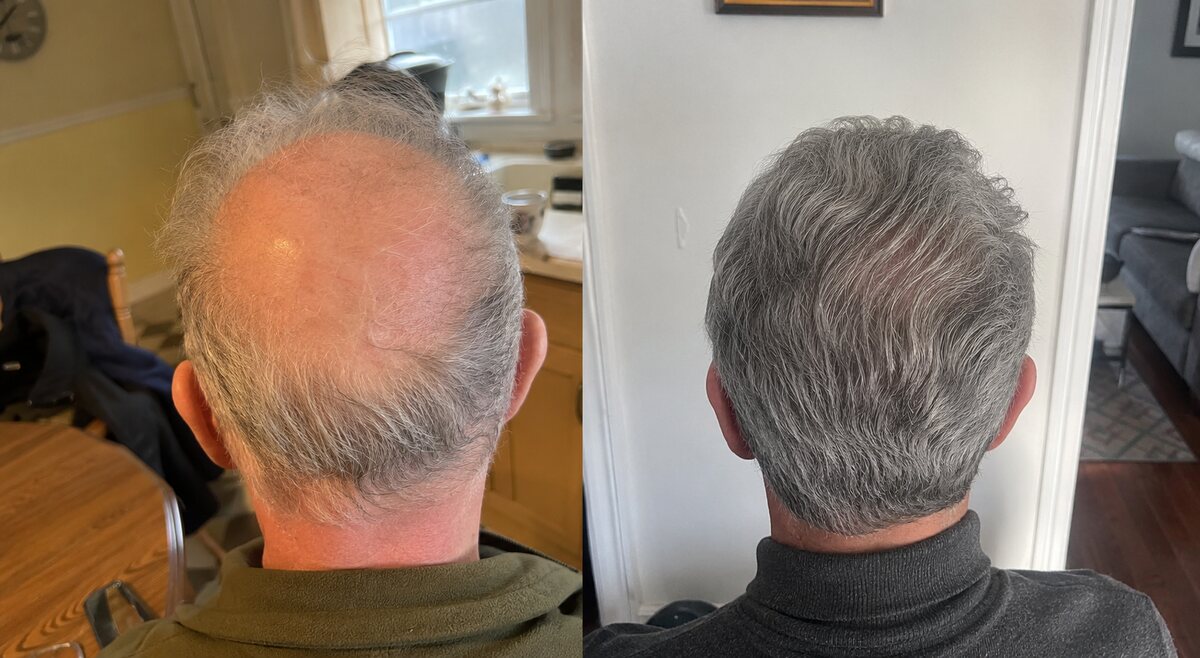
I'm going to lay this out the way I'd lay out any problem I didn't understand at first, in order, with the reasoning shown, because the only men I can actually help here are the ones who think the way I do. And men like us are not moved by a photo of somebody's restored hairline. We're moved by whether the thing makes sense.
I'm 58. Mechanical engineer, thirty-four years, mostly rotating equipment. Pumps, compressors, the machinery that runs under buildings and never gets a thought until the day it quits. That work beats one discipline into you above all others: you do not declare something broken until you have found the actual mechanism of failure. You don't rip out the part that's easy to reach. You find what failed, and why, and only then do you act.
For about fifteen years I applied exactly none of that to my own head.
The wrong assumption
My hair started going at the temples in my forties, slowly enough that I could file it under "aging" and stop thinking about it. Then the crown opened up, which is the one you can't inspect yourself, so I learned about it the way most men do, from a photo somebody else took from above. And my response to that information was not the response I'd have accepted from any engineer working for me. I assumed the system was dead. Case closed. No diagnosis, no test, just a conclusion I found convenient because it let me stop looking.
I want to be clear that this was laziness dressed up as realism. "There's nothing to be done" is a very comfortable thing to believe, because it asks nothing of you.
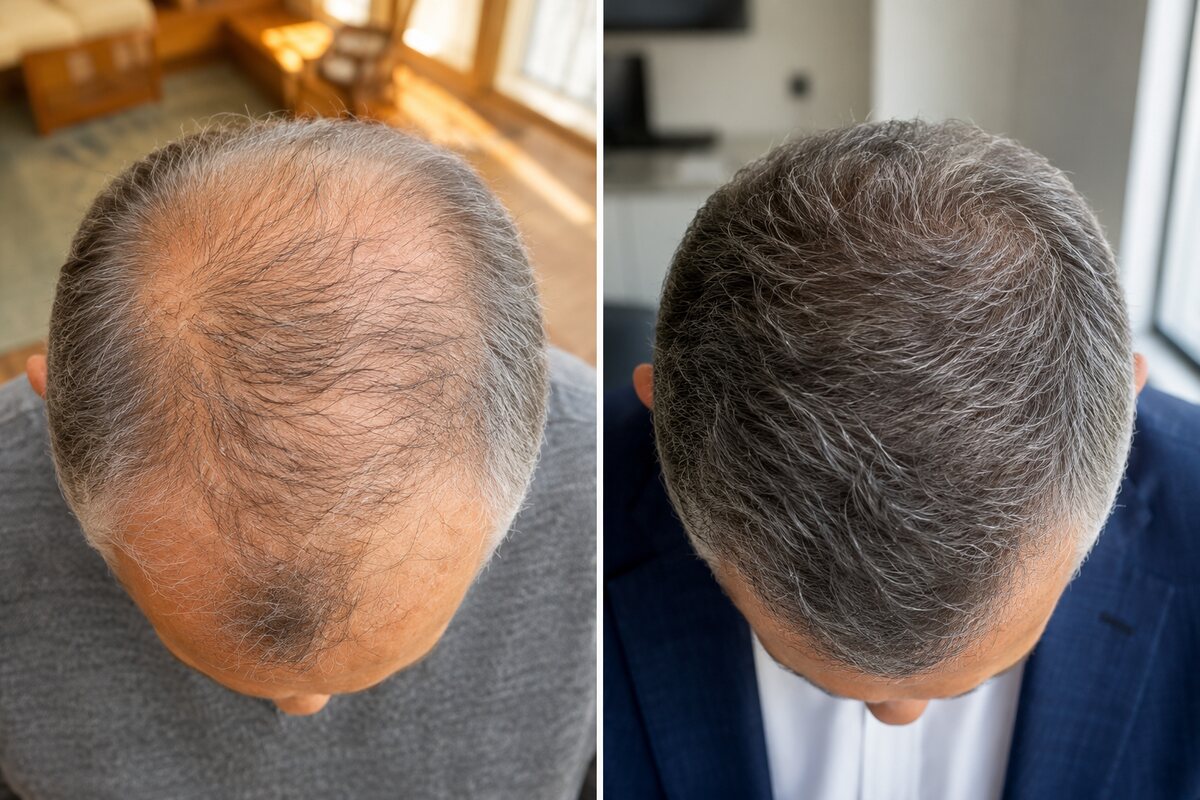
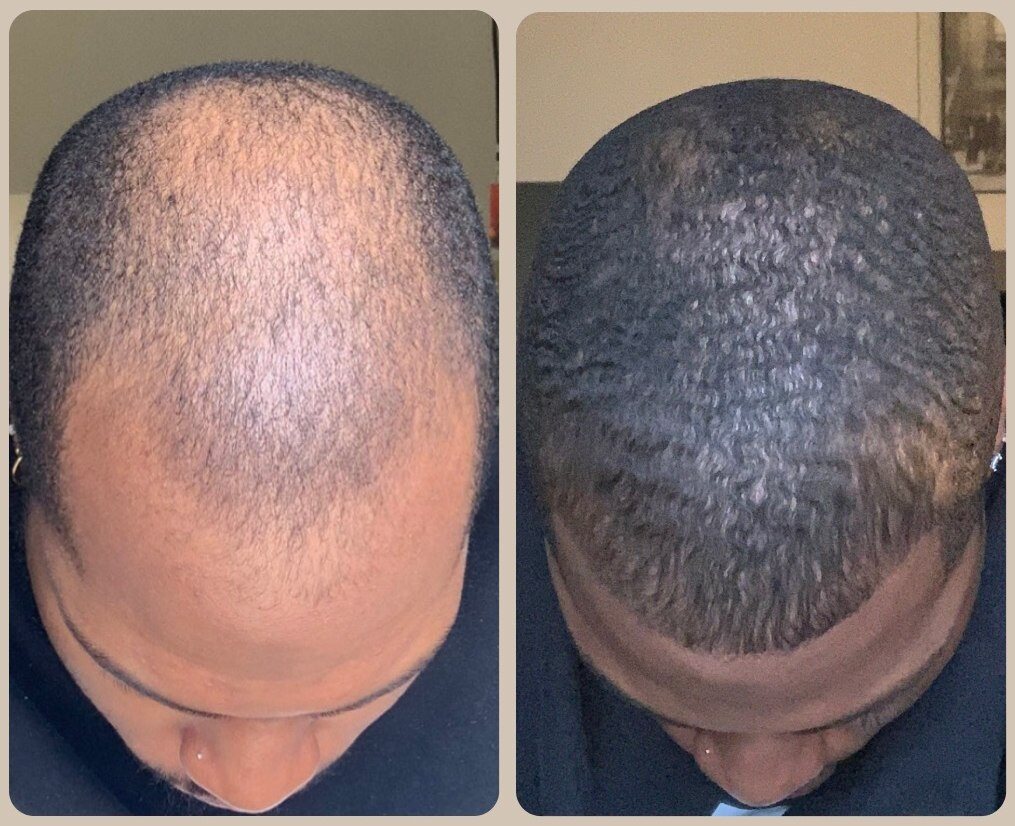
Real customer photos
These are the photos men are comparing at home.
The claim that reopened the file
What got me to reopen it was a single statement that contradicted my assumption directly, and I have never been able to leave a contradiction alone.
The statement was that in ordinary male-pattern thinning, the follicle generally does not die. It miniaturizes. Each growth cycle it produces a thinner, weaker hair than the one before, until what it puts out is barely visible. But the follicle itself, and critically the stem cells at its base, are usually still there and still alive. Dormant, not destroyed.
My first instinct was that this was marketing. So I went and checked, because that is the one thing I reliably do. There is a systematic review published through the U.S. National Library of Medicine that states it plainly: in this type of loss the follicle's stem cells are generally preserved, which is the specific reason the authors call the condition potentially reversible rather than permanent. [1]
I sat with that for two days and felt, frankly, like an idiot. I had spent fifteen years treating a stalled system as a dead one. Those are not the same fault, and you do not fix them the same way.
Dormant, not destroyed. Those are not the same fault — and you do not fix them the same way.
What I actually checked
I don't trust testimonials. I scrolled past every before-and-after without a second look, because a photo tells me nothing about mechanism and everything about marketing budget. What I wanted to know was whether the thing I'd try had any defensible reason to work.
The product I landed on is a topical from Nordic Biolabs. It has two active components, and I evaluated them separately.
The first is a plant-derived stem cell extract. The evidence here is cellular and ex-vivo, not a finished-product trial, and I weight it as such, but it is real: a cultured apple-derived stem cell extract was shown to extend the lifespan of isolated human hair follicles, keeping them active longer. [4]
The second, and the one that actually moved me, is a peptide complex. Copper-binding peptides such as GHK have been studied specifically for their effect on the dermal papilla, the cell cluster at the base of the follicle that governs growth, with the research describing support for those cells and a longer active growth phase. [6] That is a mechanism I can follow and that points in the right direction. It is not a promise. It is a reason.
For the record: the company's own marketing cites 85.7 percent of 320 people seeing new hair in 90 days. That is an internal figure, not an independent controlled trial, and I treated it accordingly, which is to say I rounded it down to "possibly" and made my decision without leaning on it at all.
How I set up the test
Here is the part that actually got me to spend the money, and it has nothing to do with hope. It has to do with bounded downside.
There is a refund window of 90 days. So I treated the whole thing as a cheap, time-boxed experiment, the way I'd treat any low-cost trial at work. I defined the failure condition before I started, because defining it afterward is how people fool themselves. My failure condition: no visible change by the end of the roughly 90-day cycle. If that condition were met, I'd shave the head down and request the refund, and the entire cost of being wrong would be a few minutes each morning and a few months of mild inconvenience. Bounded. Recoverable. An easy yes for a man who hates losing money but hates an unexamined assumption more.
What you get
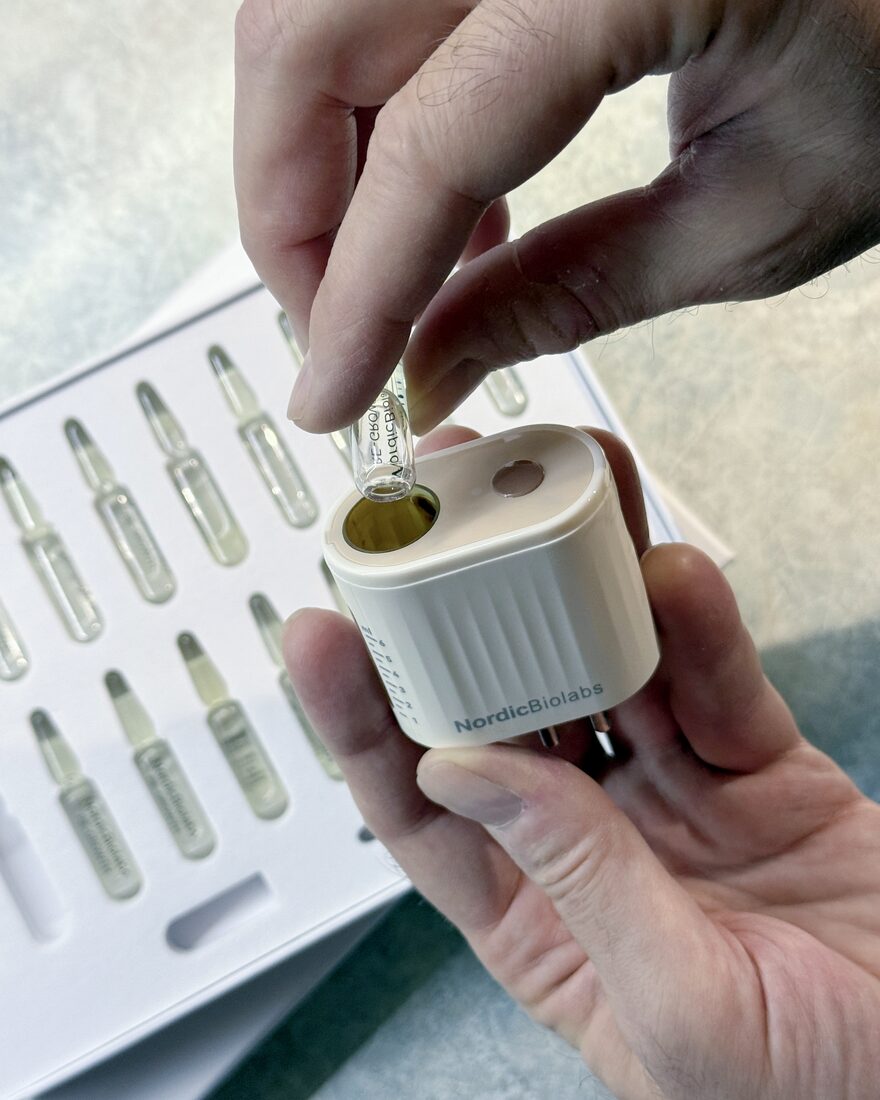
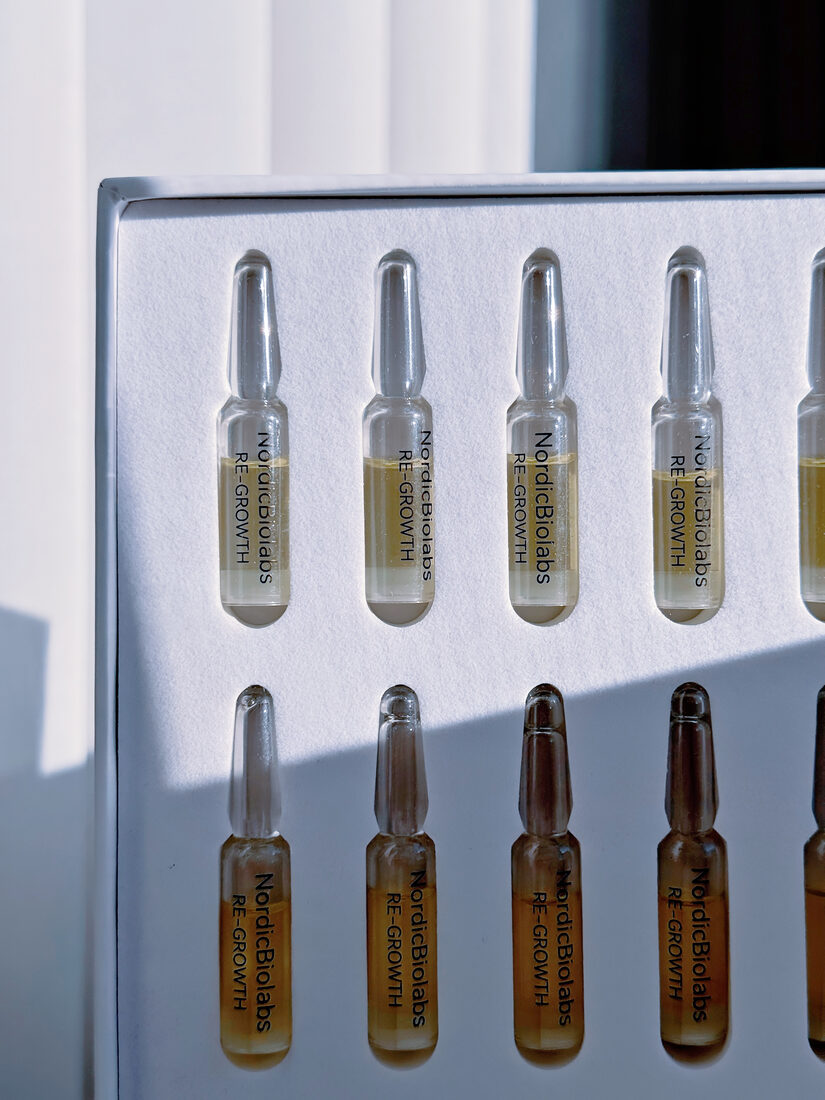
Single-use ampoules. Two minutes a morning.
What happened
The protocol itself is nothing. A single-dose vial worked into a dry scalp in the morning, five days on, two off. The only thing it asks of you is consistency, and I nearly failed that part. Around week three I'd seen nothing and I skipped two days, having privately concluded it wasn't working. That is precisely the error I would have flagged in a junior engineer: calling the result before the run is complete. I caught myself and went back to the schedule.
The first measurable change, and I use that word deliberately because I am not interested in vibes, was less hair in the drain trap. I started counting, because that is the kind of person I am, and the count dropped. The visible part came later and slower. Fine new growth along the front that you only catch when the light comes from the side. Then, by the end of the cycle, the thin area at the crown had filled in enough that I noticed I had stopped angling my head when a camera came out, a habit I genuinely had not known I'd developed until it was gone.
The honest result, and the caveats
Better, not perfect. I do not have the hairline I had at thirty and I am not going to, and any product that tells you otherwise is lying to sell you something. What I have is a measurable, visible improvement that cleared the failure condition I set in advance, which is the only standard I actually respect. So I kept going.
A few honest caveats, because I'd want them: it is slow, and if you need a result in three weeks you will quit and waste your money. It will not work for every man; no topical does. And I did not run a head-to-head against minoxidil or anything else, so I make no claim about it being "better" than another product. I only know it cleared my own test on my own scalp.
If you're where I was
If your instinct right now is that this is probably nonsense, I respect that instinct, because it was mine, and I'd ask you to do the same thing I did. Don't believe me. Believe the structure of the offer. Define your own failure condition, run the full cycle, and judge at the end. The refund makes the downside small and known, which is the only condition under which a skeptic should ever try anything.
Run the test properly, or don't run it. But "there's nothing to be done" is an assumption, not a finding. I should know. I held it for fifteen years and it was wrong.
Mentioned in this report
STEM Cell Complete Hair Cycle Solution 2.0
A two-part topical ampoule routine built around the full hair cycle, not a one-night cosmetic trick.
- 90-day money-back
- ≈2 min a morning
- Topical · external use
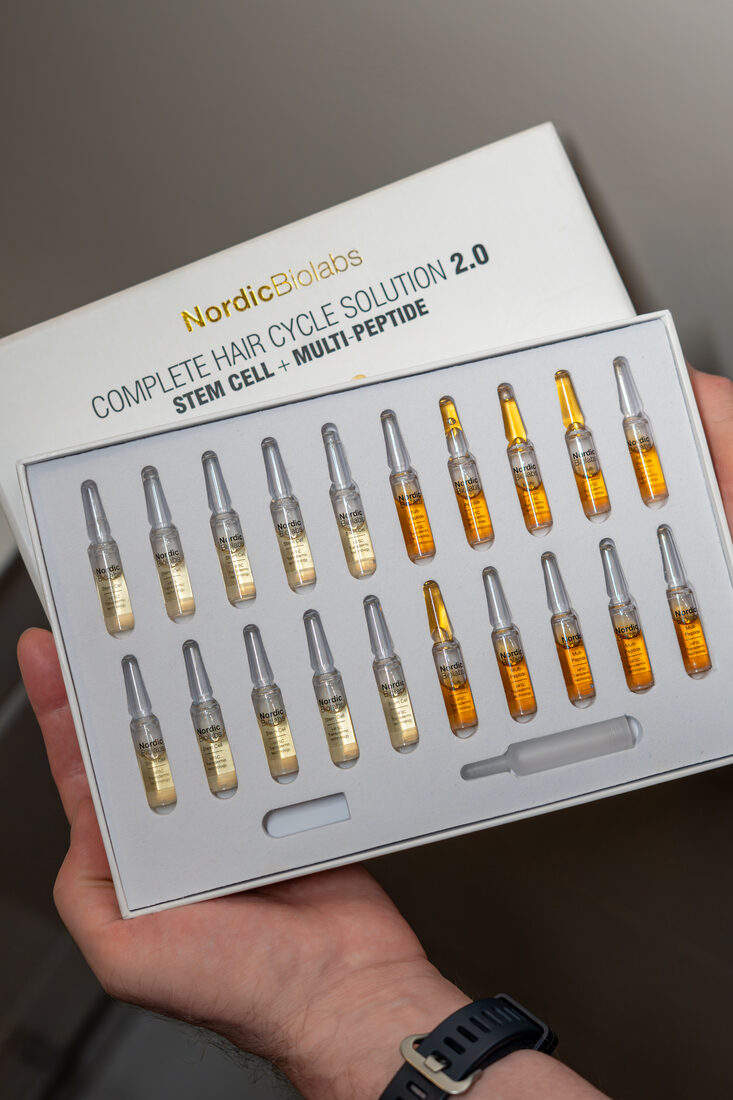
- 1-Month20 ampoules · $119/mo Save 56%$119
- 3-Month60 ampoules · $82/mo Save 63%$247
- 6-Month · Full Cycle120 ampoules · $75/mo Save 70%$447
Advertorial. Advertorial. A representative account based on common customer feedback, not one named individual. Results vary.
Not evaluated by the FDA. Topical, for external use only; not intended to diagnose, treat, cure, or prevent any disease. The 85.7% figure is a company study; individual results vary.
Results may vary; individual results are not typical. The 85.7% figure reflects a company study of 320 participants aged 30–70 and is not a guarantee of results.
These statements have not been evaluated by the FDA. The product discussed is a topical for external use only and is not intended to diagnose, treat, cure, or prevent any disease.
Scientific sources
Public NLM/PMC sources for ingredient-level evidence and follicle biology. Injectable stem-cell papers are category context, not claims about this topical.
- PMC10047891 · Human Stem Cell Use in Androgenetic Alopecia: A Systematic Review
- PMC10174680 · Stem Cell Applications in Human Hair Growth: A Literature Review
- PMC10863936 · Autologous Stem Cell-derived Therapies for AGA: Systematic Review of RCTs
- PMC5674215 · Plant stem cells in cosmetics: current trends and future directions
- PMC11603400 · New Plant Extracts Exert Complementary Anti-Hair Loss Properties
- PMC4969472 · Efficacy of a Complex of 5-ALA and GHK Peptide on Hair Growth
- PMC13113319 · Overview of Short Peptides for Hair Loss